How to Measure for Curtains (Without Losing Your Mind)

 
✨Let’s be honest—many homeowners struggle with how to measure for curtains correctly during home decorating. Measuring for curtains is the part of home decorating that everyone dreads. You finally find a fabric you love, order what you think is the right size, and two weeks later you’re standing there with a curtain that’s either hovering three inches above the floor or puddling like a wedding dress in a mud puddle.😩 
 
It doesn’t have to be that way. Getting curtains that actually fit comes down to three things: measuring your window right, choosing how you want them to hang, and knowing what to do when your window isn’t a standard rectangle. Here’s everything I wish someone had told me before I hung my first set.📝

Step 1: How to Measure for Curtains — Window Width and Height

Before you even start browsing fabrics, you need numbers. And not just any numbers—accurate ones. The two main ways to hang curtains in most US homes are inside mount (inside the window frame) and outside mount (above and around the frame). Each one changes how you measure.
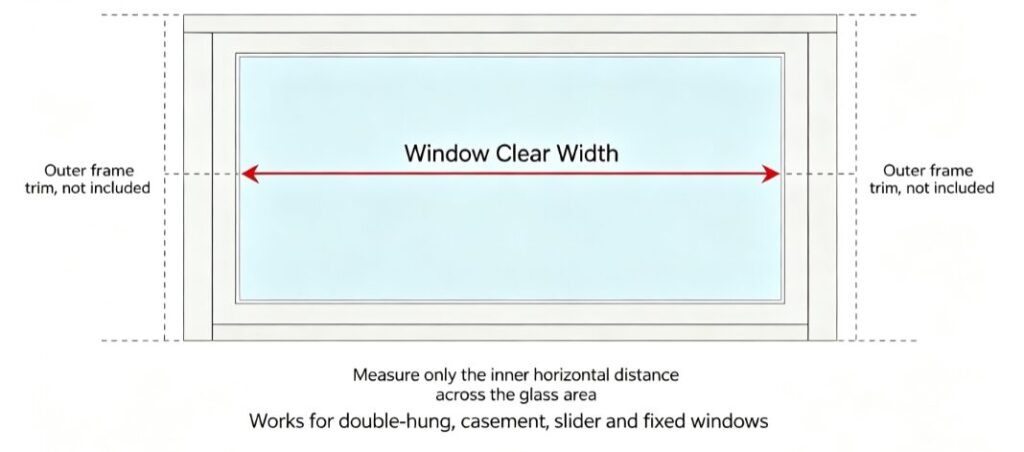
Diagram showing how to measure inner window width for curtains, window frame horizontal measurement guide for inside and outside mount curtain sizing

Width

Start by measuring the exact inner width of your window frame. That’s your baseline.
Inside mount: If you want that clean, built-in look where the curtain sits neatly inside the frame, keep it simple. The rod length and curtain width should match the inner width exactly—no overhang. It’s tidy, but it also means less coverage when the curtains are closed.
 
Outside mount: This is what most people end up doing, and for good reason. Measure your window frame, then add 6 to 10 inches total to the rod length—so 3 to 5 inches on each side. That extra space lets the curtains stack flat against the wall when they’re open, which means zero window glass gets blocked and you get all the natural light.☀️
 
As for fullness, here’s the rule of thumb: go with 1.8x the width if you want a sleek, modern look, or 2x if you want those soft, luxurious folds that make a room feel expensive.

Height

Measure from where you plan to mount the rod straight down to either the sill or the floor—wherever you want the curtain to end. There are four common lengths people go with:

Standard floor-length: Leave about a 1-inch gap between the curtain bottom and the floor. This is the most practical choice for everyday living. It keeps dust from collecting on the hem and makes vacuuming underneath a breeze.

Flush to the floor: No gap at all. The curtain skims the floor perfectly. It looks tailored and intentional—great for formal living rooms and master bedrooms where you want that polished, hotel-like feel.

Pooled on the floor: Add an extra 2 to 4 inches past the floor length so the fabric gathers slightly at the bottom. It gives off a relaxed, romantic, slightly vintage vibe. Best suited for styled living rooms or primary bedrooms with high-end decor—skip this one if you have pets that will use the puddle as a bed.🐱

Sill-length: The curtain ends right at the window sill. It’s functional, unobtrusive, and perfect for kitchens, bathrooms, and bay windows where you don’t want fabric getting in the way.

Step 2: Pick a Header Style That Makes Sense🪡

Measuring is only half the battle. The way your curtain attaches to the rod changes the whole look of the room. Here’s a breakdown of what actually works where.

Grommet Curtains — The Safe Bet🏆

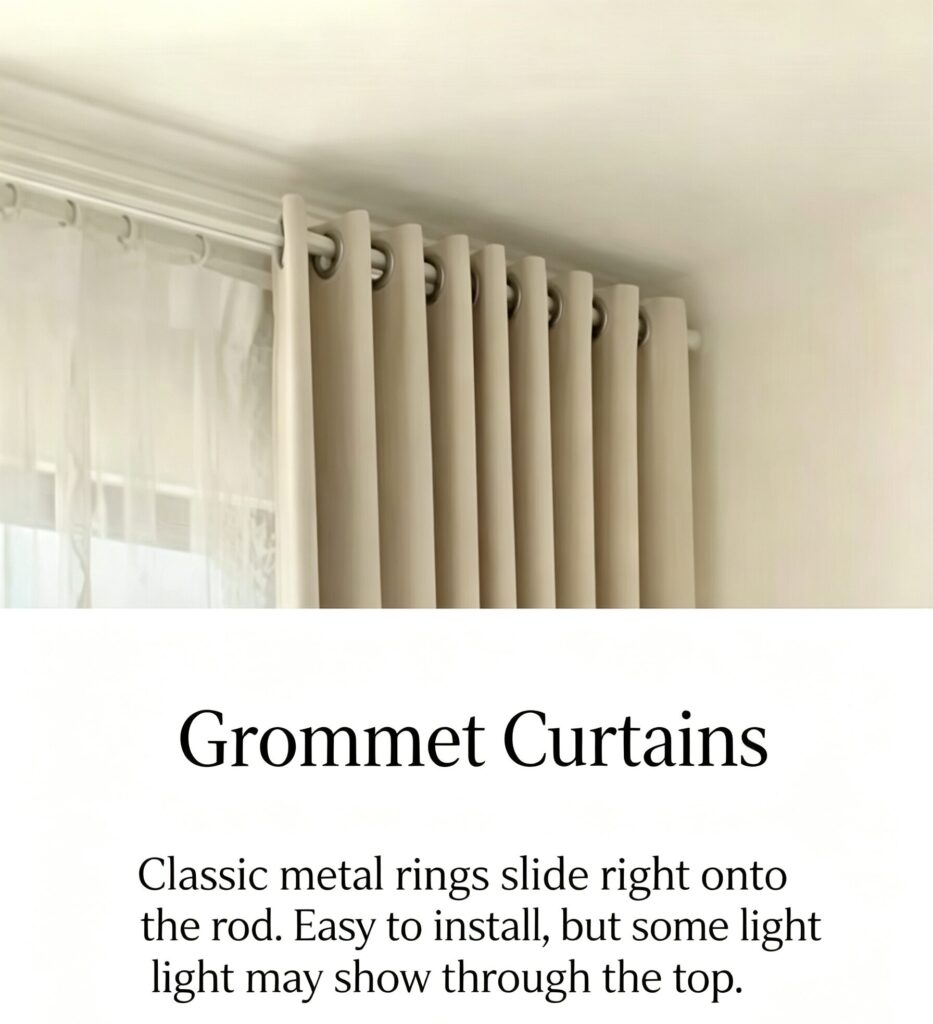
These are everywhere for a reason. The metal-ringed holes slide smoothly over standard rods, they’re dead simple to install, and you can throw them in the washing machine without overthinking it. They work in bedrooms, living rooms, and pretty much any standard-size window. If you’re overwhelmed by options, start here.
Grommet eyelet curtains with metal holes, easy sliding curtain rod style for daily family use

Rod Pocket — For Windows You Don’t Touch🪟
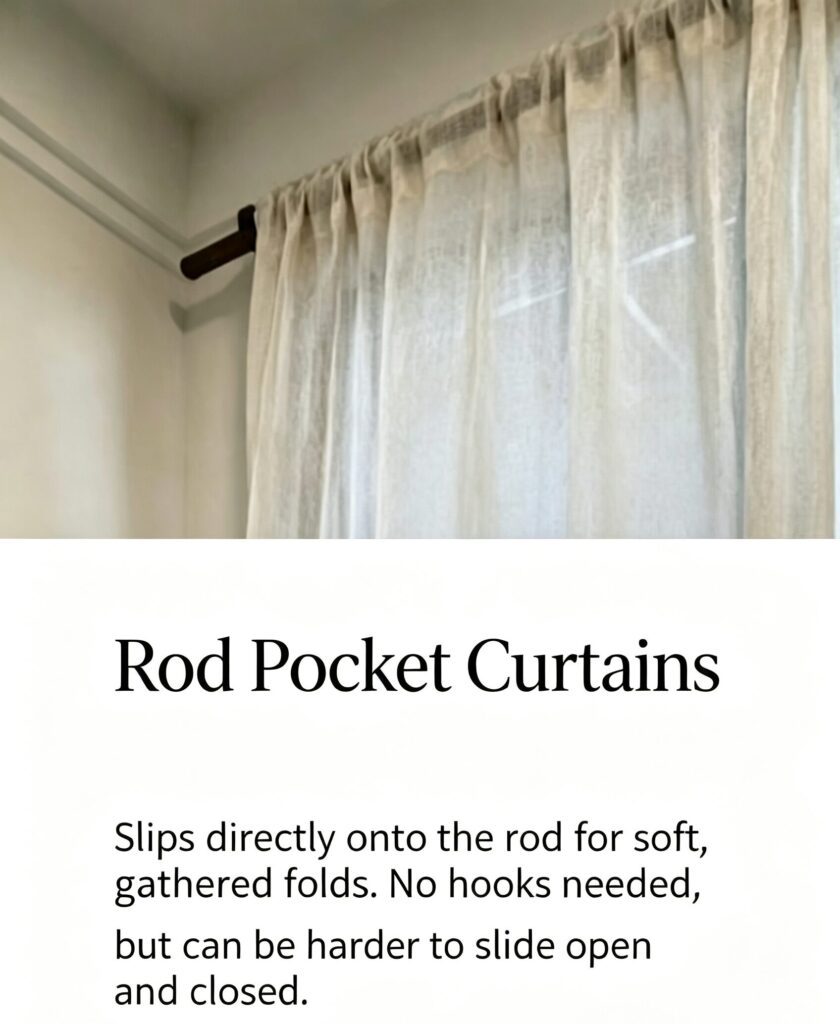
Rod pocket curtains have a sewn-in sleeve at the top that hides the rod. The result is a seamless, soft look—especially nice with linen or cotton. The catch? They’re a pain to open and close frequently. Reserve these for decorative windows that stay put most of the time: living room accent windows, bay windows, or any window that’s more about looks than function.
Rod pocket linen curtains header, curtain rod pocket hanging style for home windows

Back Tab — The Minimalist’s Pick🤍

Hidden fabric loops on the back give you a clean front with zero visible hardware. If you’re the type who gets annoyed by visual clutter, this one’s for you. They work well in bedrooms and living rooms and strike a nice balance between looking good and being practical.

Pinch Pleat — Go Big or Go Home🏡

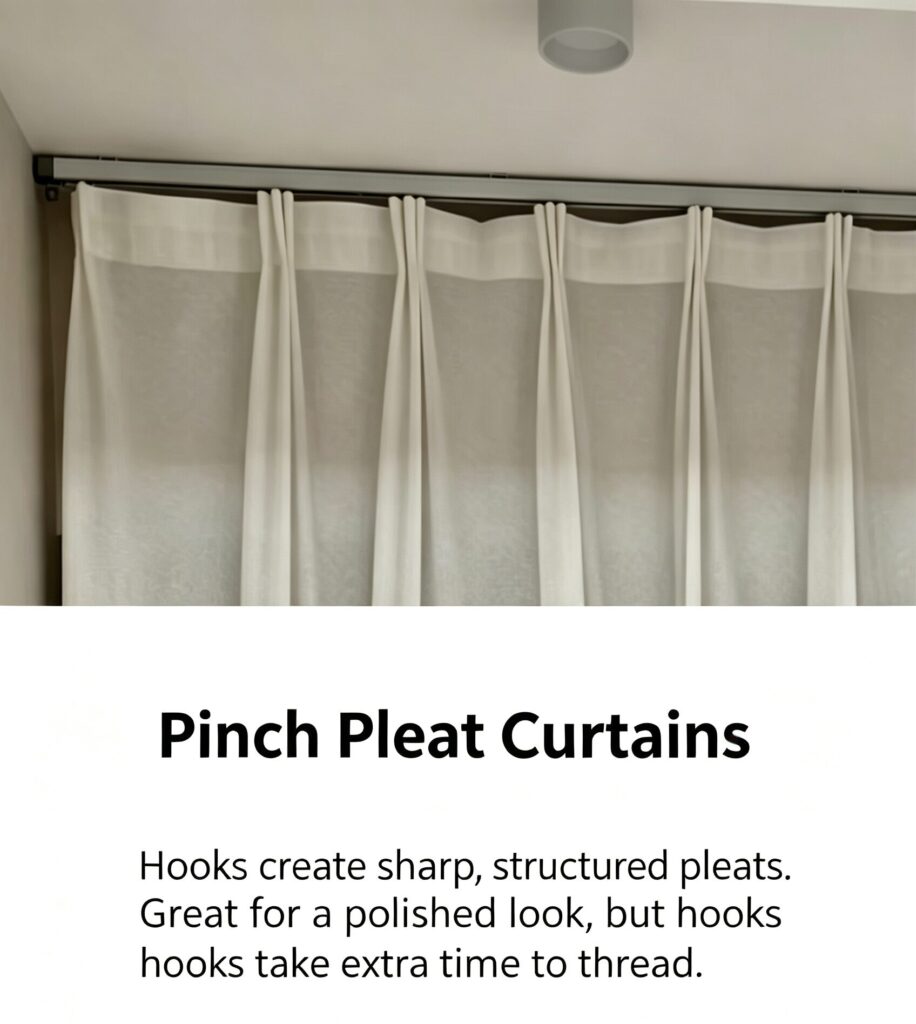
These have structured, sewn-in folds that hang in neat, elegant drapes. They look expensive because they are expensive, and they belong in spaces that can handle the drama: high-ceiling villas, oversized living rooms, and floor-to-ceiling windows. On a small bedroom window, they’ll look like you’re trying too hard.
Standard pinch pleat curtain top design, curtain style for ceiling track and rod with rings

Wave Fold — Custom Track Territory💫

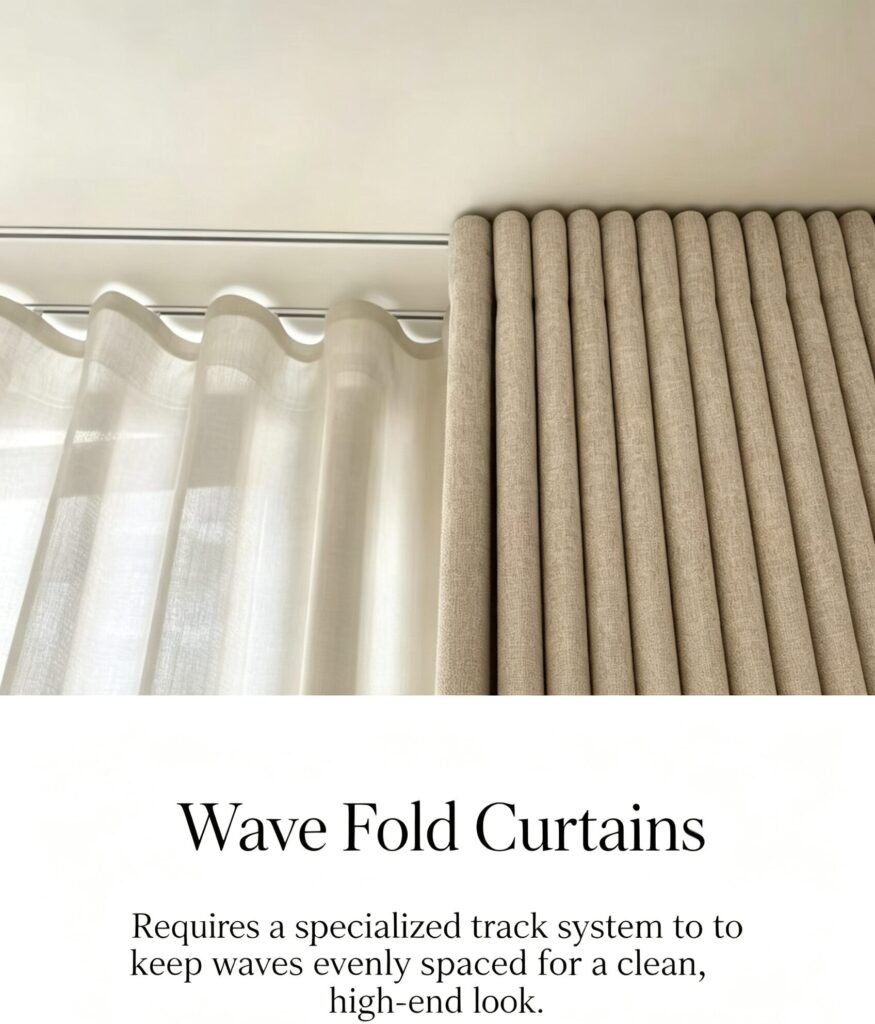
Wave folds create perfectly uniform, continuous waves that look like something out of an interior design magazine. But they require specialized tracks, not standard rods, which means they’re only realistic if you’re doing a full custom renovation or furnishing a luxury space. For a casual room refresh? Skip it.
Wave fold curtain close-up, uniform wave curtain with dedicated track, high-end custom window treatment for luxury home decor

Hook and Loop (Velcro) — The Renter’s Friend🔧
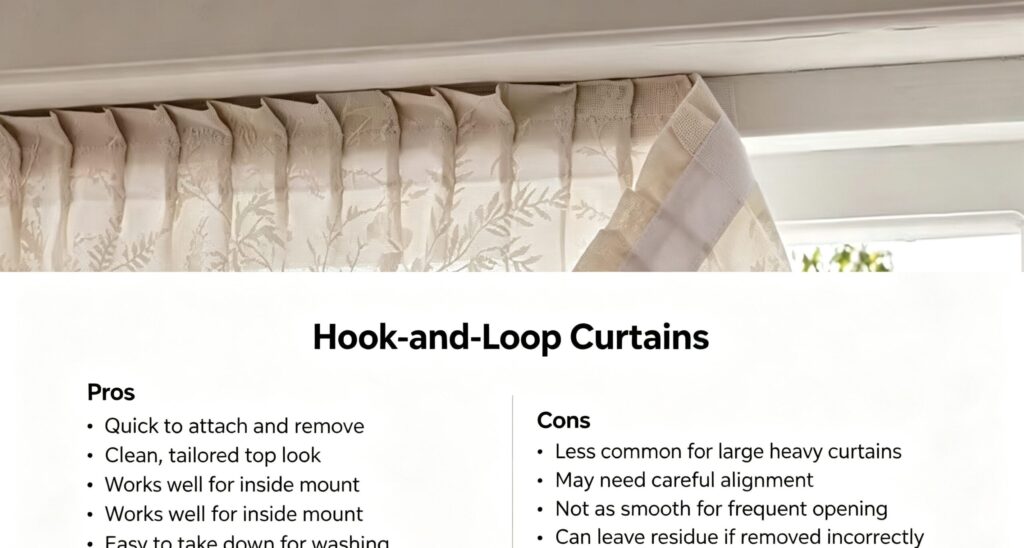
No drill, no screws, no commitment.
The good: Tool-free installation means you can take them down for cleaning or moving without patching a single hole. The tight top seal blocks more light, and with no metal parts, they’re safe for kitchens and kids’ rooms.
The bad: Velcro can’t handle heavy fabrics, so forget about blackout curtains. The adhesive wears down over time if you’re adjusting them constantly, and it only sticks reliably to smooth, flat walls. Textured paint or wallpaper? Not happening.
Hook-and-loop velcro curtain header close-up, no-drill adhesive curtain for rental houses, easy install lightweight window curtain

Step 3: When the Window Isn’t “Normal”🌀

Straight, rectangular windows are easy. Everything else requires a little extra thought.
Bay and bow windows: Measure each panel individually. Don’t try to use one long rod or one curtain width across the whole thing. Break it into segments, each with its own rod and curtain. It’s more work upfront, but it’s the only way to get a clean fit.


Sliding glass doors: Always outside mount, and give yourself extra width on both sides. You need the curtains to stack completely off the door when they’re open—otherwise you’re fighting fabric every time you walk outside.
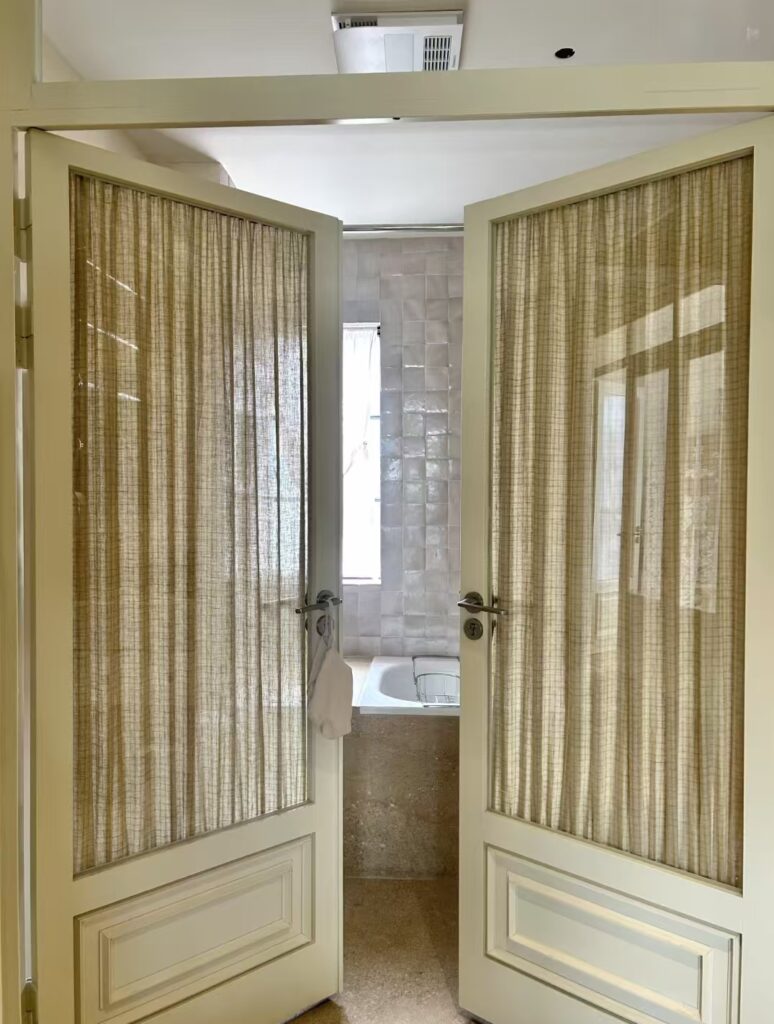
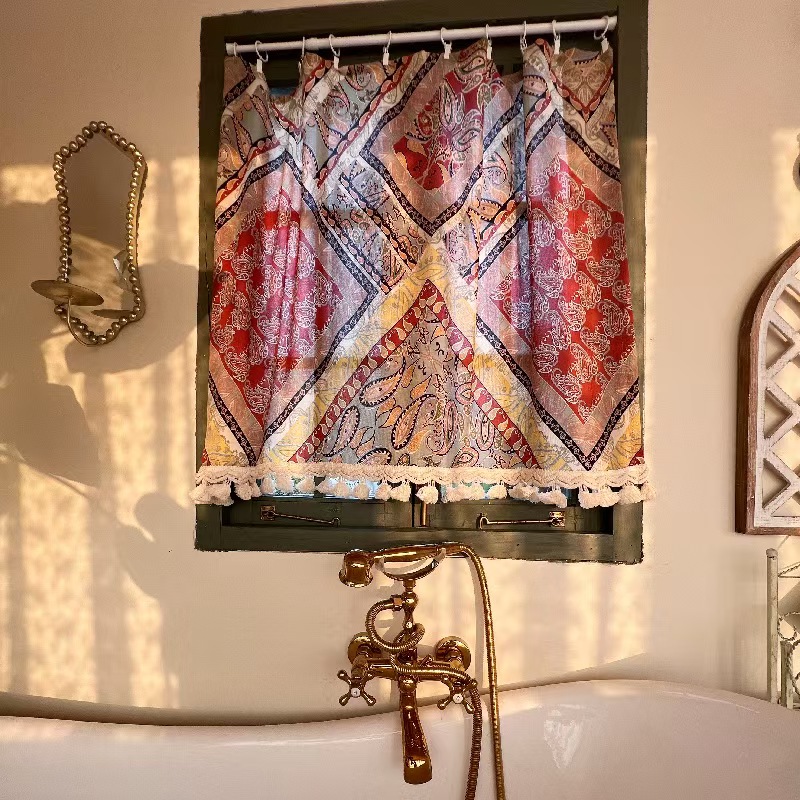
Small utility or bathroom windows: Inside mount is usually your best friend here. It keeps the look compact and avoids fabric crowding a tight space.
Tall, high-ceiling windows: Measure from the exact rod mounting point down. Pinch pleat is a smart choice for these because the structured folds give you a little wiggle room if your measurements are off by an inch or two.
Fixed decorative curtain for French doors, top and bottom secured curtain, non-drafting curtain for glass door and window decor

Bottom Line: Final Tips on How to Measure for Curtains💡

Measuring for curtains isn’t rocket science, but it is easy to mess up if you rush it. The formula is simple: measure twice, decide on inside vs. outside mount, pick a header that matches how you actually live in the room, and adjust for whatever weird shape your window happens to be.

Good curtains aren’t cheap, and cheap curtains aren’t good. A well-fitted set can easily last you ten years, so taking an extra twenty minutes to get the numbers right is one of the best time investments you can make in your space.

That covers measuring and hanging styles. Next up, we’ll talk fabric—how to choose materials that hold up to sun exposure and which ones work best for east-facing vs. west-facing windows. 🔜See you then.

Cottage Blackout Curtain Panel | Blue Leaf Red Berry Botanical Custom Size Window Drapery
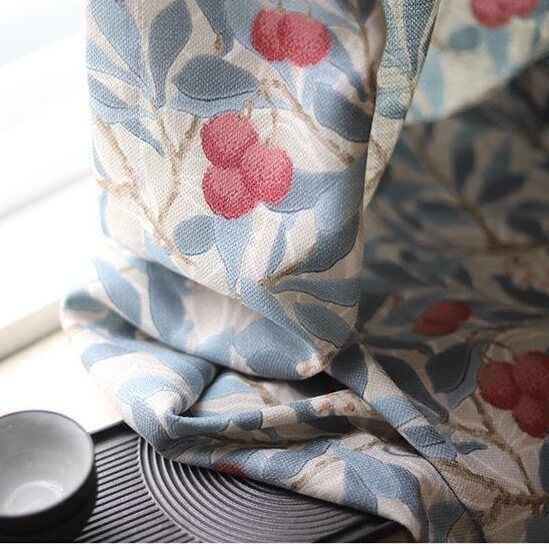
 

close shot of botanical print on cottage blackout curtain panel, blue branches and red berry pattern on white background

Leave a Comment

Your email address will not be published. Required fields are marked *

Scroll to Top