
Quick answer: Cotton linen blends breathe better than 100% cotton, soften with every wash, and outlast most synthetic “cooling” fabrics by years. If you’re tired of clothes that feel like plastic wrap by noon, here’s everything you need to know.
Why I Switched to Cotton Linen fabric-And Never Went Back
I used to buy those “ice silk” and “quick-dry” shirts every spring. By July, they’d smell weird, cling to my back, or pill into something unwearable.
Then I found a cotton linen shirt at a flea market in Maine. It was wrinkled, slightly stiff, and looked like something my grandfather would wear. I bought it for $12.
Five years later, it’s the softest thing I own. It doesn’t smell after a hot day. It doesn’t stick to me. And somehow, the wrinkles look intentional now.
That’s the thing about cotton linen — it doesn’t try to be perfect. It just works.

What Is Cotton Linen, Really?
It’s not just “cotton mixed with linen.” A real cotton linen blend is engineered to fix the weaknesses of both fibers:
| Fiber | The Good | The Bad |
|---|---|---|
| 100% Cotton | Soft, gentle on skin | Traps heat, clings when sweaty, wrinkles |
| 100% Linen | Ultra-breathable, antibacterial, moisture-wicking | Stiff, rough, can itch, loses shape |
| Cotton Linen Blend | Breathable + soft, gets softer over time, durable | Wrinkles (but the good kind) |
Common blends you’ll see:[1]
- 70% cotton / 30% linen — Softer, more drape, great for shirts and dresses
- 60% cotton / 40% linen — More breathable, better structure, ideal for pants and jackets
The higher the linen content, the more airflow you get. The higher the cotton, the more comfortable it feels against sensitive skin.
5 Reasons Cotton Linen fabric Beats Synthetic “Cooling” Fabrics
1. It Actually Breathes
Cotton linen fibers have a natural hollow structure. Air moves through the fabric instead of getting trapped against your skin.
Synthetic “cooling” fabrics? They wick sweat, sure — but they also trap heat and start smelling like a gym bag after a few washes.
Real talk: On a 95°F day in Austin, my cotton linen shirt stays dry. My polyester “performance” tee does not.
2. It Gets Softer, Not Worse
Most fabrics degrade. Cotton linen evolves.
| After | What Happens |
|---|---|
| 1st wash | Slightly stiff, crisp feel |
| 5th wash | Noticeably softer, wrinkles relax faster |
| 20th wash | Butter-soft, drapes beautifully, still intact |
I’ve had cotton linen fabric pieces outlast three cycles of fast fashion. The upfront cost is higher, but the cost-per-wear is a fraction.
3. It’s Naturally Antibacterial[2]
Linen fibers resist bacteria, dust mites, and mildew. That means:
- No weird smells after one wear
- Safe for sensitive skin and allergies
- No static cling (ever)
If you sweat a lot or have eczema-prone skin, this matters more than any marketing claim.
4. The Wrinkles Are a Feature, Not a Bug
Here’s what took me years to accept: cotton linen wrinkles look good.
Not the crumpled, slept-in look of cheap cotton. The relaxed, lived-in drape of something well-made. It signals “I didn’t try too hard” — which, in 2026, is the whole point.
This is why cotton linen fabric dominates:
- Minimalist fashion
- Japanese “wabi-sabi” style
- Modern coastal / Mediterranean aesthetics
- “Quiet luxury” looks
5. It’s Actually Sustainable
- Flax (linen source) uses ~5x less water than cotton
- The entire flax plant is usable — minimal waste
- Cotton linen lasts 12x longer than comparable cotton products
- Biodegradable at end of life
If you’re trying to buy less but better, this is the fabric.
The Downsides (Let’s Be Honest)
No fabric is perfect. Here’s what you’re signing up for:
| “Problem” | Reality |
|---|---|
| Wrinkles | Part of the aesthetic. Steam lightly if needed, but don’t iron aggressively |
| Slight shrinkage | Quality pieces are pre-shrunk. Buy true to size |
| Light colors can be sheer | Wear a cami or embrace the layered look |
If you need boardroom-crisp every day, cotton linen isn’t for you. For everything else? It’s perfect.
How to Spot Real Cotton Linen (Avoid the Fakes)
The market is flooded with “linen-look” polyester. Here’s how to tell:
Look at it
- Real: Irregular grain, matte finish, slight color variation
- Fake: Uniform texture, plastic-y sheen, too “perfect”
Touch it
- Real: Dry, slightly textured, no squeak when rubbed
- Fake: Slippery or harshly rough, makes a plastic sound
Crumple test
- Real: Soft creases that recover slowly
- Fake: Bounces back instantly (too much elastic) or leaves stiff creases
Hold it to light
- Real: Even, breathable gaps
- Fake: Dense, uneven, poor airflow
Pro tip: Check the label. “Linen-look,” “linen blend” (without percentages), or no fiber content listed? Walk away.
Where Cotton Linen Works Best
Clothing
- Summer shirts and button-downs
- Wide-leg pants and jumpsuits
- Loose dresses and tunics
- Lightweight cardigans and overshirts
Style tip: Pair with leather sandals, canvas totes, and minimal jewelry. Let the fabric do the talking.
Home
- Bed sheets and pillowcases (cooler sleep, fewer night sweats)
- Curtains (filters light beautifully)
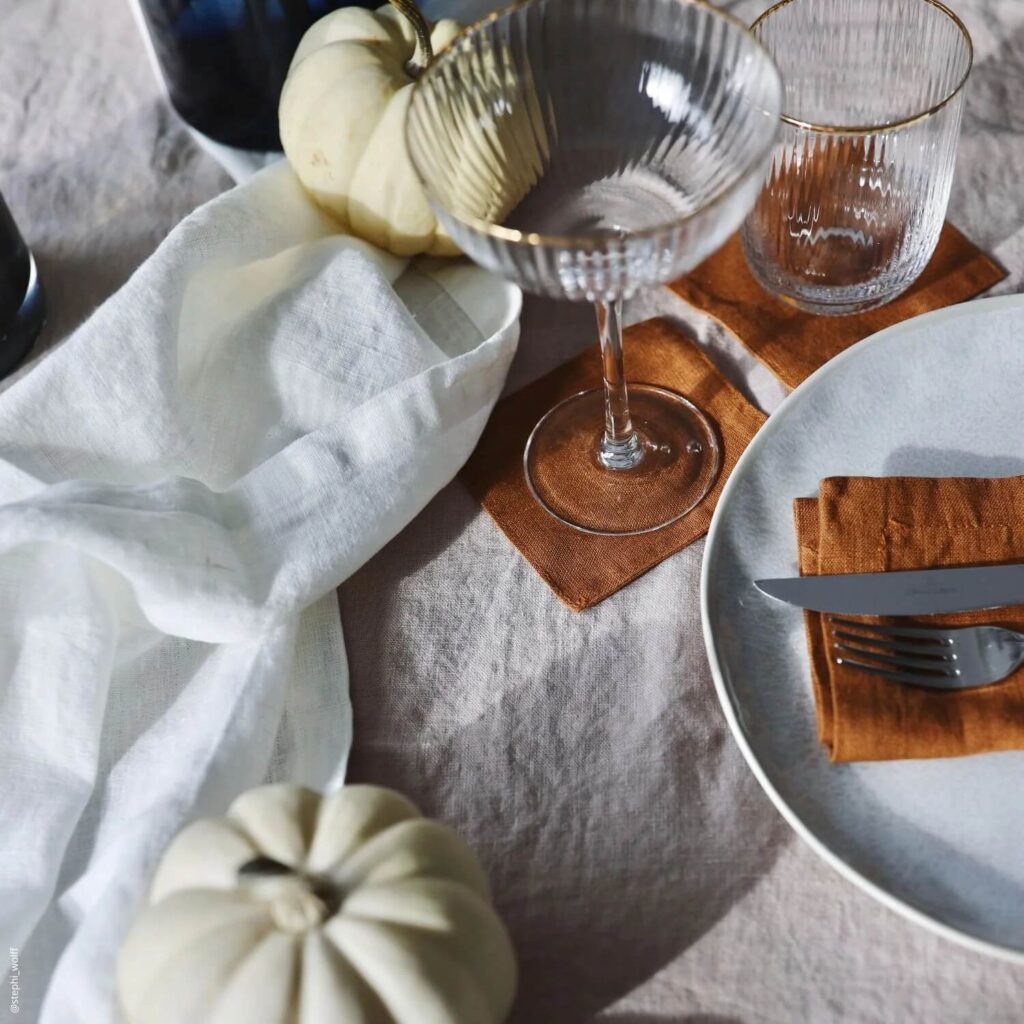
- Table linens and napkins
- Sofa throws and cushion covers
Accessories
- Tote bags and market bags
- Reusable produce bags
- Fabric wall hangings
Care Guide: Keep It Simple
Cotton linen is low-maintenance if you don’t overthink it:
- Wash cold — Gentle cycle or hand wash
- Air dry — Skip the dryer when possible; hang in shade
- Don’t over-iron — Steam lightly if you must, but embrace the texture
- Store loosely — Don’t vacuum-seal; let it breathe
The rule: The less you fuss with it, the better it looks.
FAQ
Q: Is cotton linen good for hot sleepers? A: Yes. The breathability and moisture-wicking properties make it ideal for bedding. Many hot sleepers report better sleep quality after switching.
Q: Will it shrink in the wash? A: Quality cotton linen is pre-shrunk. Cheap versions may shrink 3-5%. Always check care labels.
Q: Is it worth the higher price? A: If you calculate cost-per-wear, absolutely. A $80 cotton linen shirt worn 100 times costs $0.80 per wear. A $25 fast-fashion shirt worn 5 times costs $5 per wear.
Q: Can I wear cotton linen to work? A: Depends on your office. For casual or creative workplaces, yes. For formal corporate settings, stick to darker colors and minimal wrinkling.
Q: What’s the difference between European and Chinese linen? A: European flax (especially French) is considered premium. Chinese linen has improved significantly and offers 30-40% savings with minimal quality difference for most uses.
Bottom Line
Cotton linen isn’t about perfection. It’s about comfort that lasts, style that doesn’t try too hard, and buying something once instead of every season.
If you’re building a wardrobe (or home) that actually works for real life — hot commutes, lazy Sundays, spilled coffee, years of washing — this is the fabric to bet on.
Written by Velv Home. Last updated June 2026.
