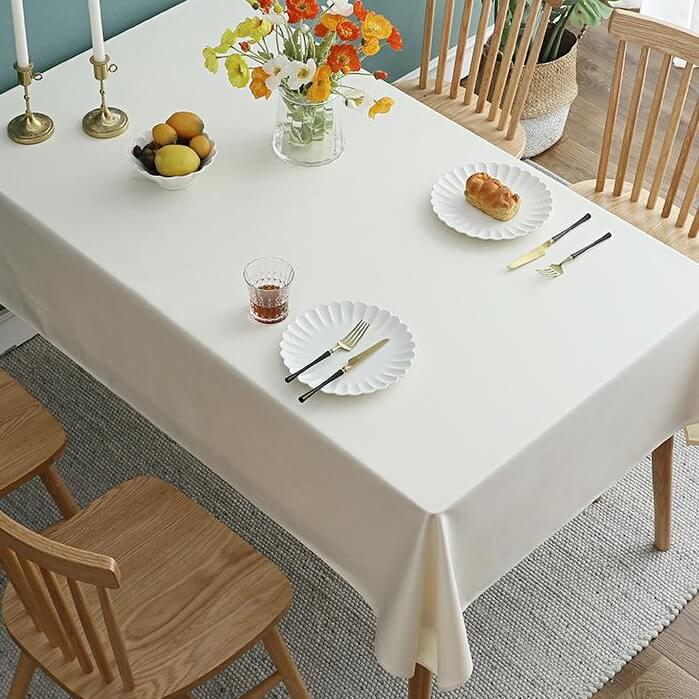
Why Choose a Non-Toxic Table Runner for Your Home?
Looking for a non-toxic table runner that’s both safe for your family and stylish enough for every occasion? Three years ago, I grabbed a $12 clear PVC mat from a big-box store. Thought I was being smart—protect the oak table, keep it looking nice.
Six months later? Cloudy. Yellow around the edges. And this weird sticky film that grabbed every crumb. Glass cleaner didn’t touch it. That mat went straight in the trash.
That’s when I started looking for a non-toxic table runner that actually worked. Haven’t bought PVC since.
What the Label Actually Means
Flip over the packaging on those budget clear mats at major retailers. You’ll spot it: California Proposition 65 warning. Phthalates. Chemicals linked to cancer or reproductive harm.
Here’s the thing—the FDA does regulate food-contact stuff. But a “table protector” isn’t the same as a plate. Most of these mats aren’t marketed for direct food contact, so they slip through a gap. Fine print stuff.
We stopped letting our toddler eat off ours the day I actually read the label. Felt dumb for not checking sooner.
If you’re hunting for a safe table runner for kitchen use, this is exactly why the material matters.
Why PVC Turns Yellow (Even the “Nice” Ones)
Not a quality issue. Just chemistry.
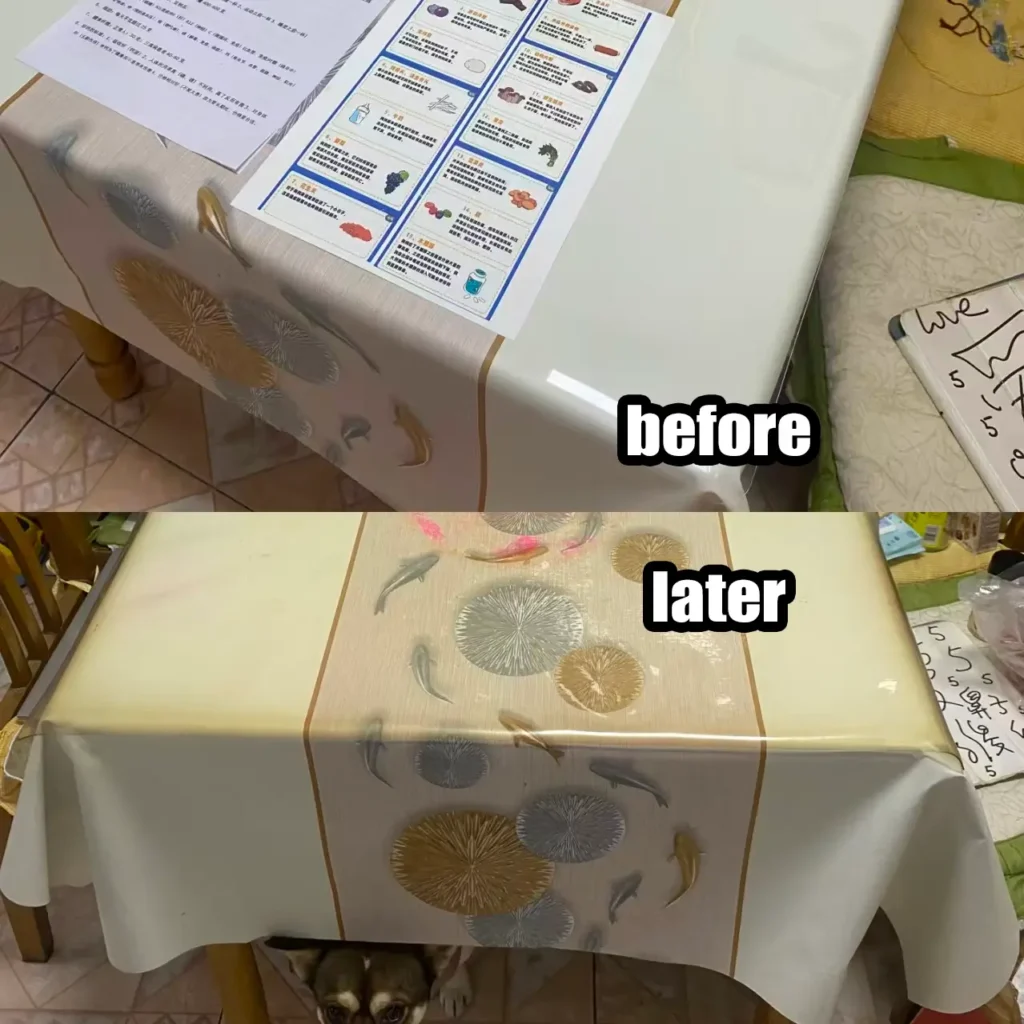
PVC needs plasticizers to stay flexible. UV light + heat = those plasticizers break down. Oxidation. You get yellowing, cloudiness, eventually that tacky surface that never quite wipes clean.
I actually tested this. Bought a $35 “heavy-duty crystal clear” version and a $12 basic one from different stores. Both started yellowing at the edges within eight months. The expensive one took longer to get sticky. But it got there.
Home improvement forums are full of posts about this. Almost a running joke at this point.
What We Switched To
About two years ago, I landed on 100% cotton table linens as our go-to. Not because I’m anti-plastic—just because cotton actually works better, and it fits what I wanted in a non-toxic table runner.
No chemical weirdness. Cotton doesn’t need warning labels. Kids eat directly off the table now. No second thoughts.
It gets better with use. Our main runner has been through the wash… a lot. Probably close to a hundred times by now. Softer than when we bought it. Color faded a bit, but in a good way. Looks lived-in, not ruined.
No trapped moisture. PVC seals everything. Humid months, we’d lift the mat and find condensation rings on the wood. Cotton breathes. Table stays dry underneath.
Actually looks right. Our kitchen is a 1920s Craftsman. A sheet of yellowing plastic looked like a cafeteria tray. The cotton runner just… fits.
Cheaper over time. That $12 mat lasted half a year. Our cotton one was mid-$30s and is on year three. Even with laundry, it’s less per month. And no more plastic in the landfill.
Finding the Right One for Your Space
Not all cotton runners are equal. If you want something that holds up—especially as a waterproof non-toxic table runner alternative—here’s what to look for:
- 100% cotton — skip the blends. Cotton-polyester mixes tend to pill worse than pure cotton, and polyester doesn’t absorb spills properly.
- Tight weave — looser fabric lets liquids through faster. Ours has a medium-tight plain weave that buys us a few seconds to grab a napkin.
- Machine washable at normal temps
- Pre-shrunk — otherwise it twists up after the first wash
- Weight around 5–7 oz per square yard — drapes nice, washes easy
Solid colors or simple stripes hide wear better than busy patterns. But that’s just me.
If you’re after something decorative, a non-toxic floral table runner in cotton can hit the same notes—just check that it’s actually printed with water-based, food-safe dyes. Some cheap imports use solvent-based inks that defeat the whole purpose.
Bottom Line
PVC mats solve spills by creating new problems. Chemicals. Yellowing. That sticky film. More plastic waste.
For a table that gets daily use—especially with kids around—a non-toxic table runner in cotton isn’t the fancy option. It’s just the one that makes sense.
Switched from PVC to cotton? What worked for your kitchen?
[Shop Non-Toxic Table Runners →]